Happy Workplace


Friendly Workplace
We value our commitment to employees,
by building a happy and healthy workplace, and creating a challenging work environment
suitable for sustainable learning, to grow together with our people.
Diversity and Equal Opportunity
● Strategy:Provide competitive salaries and comprehensive employee benefits to attract diverse talent and ensure workplace equality.
● Goals of 2030:
◆ Diversify employee benefits
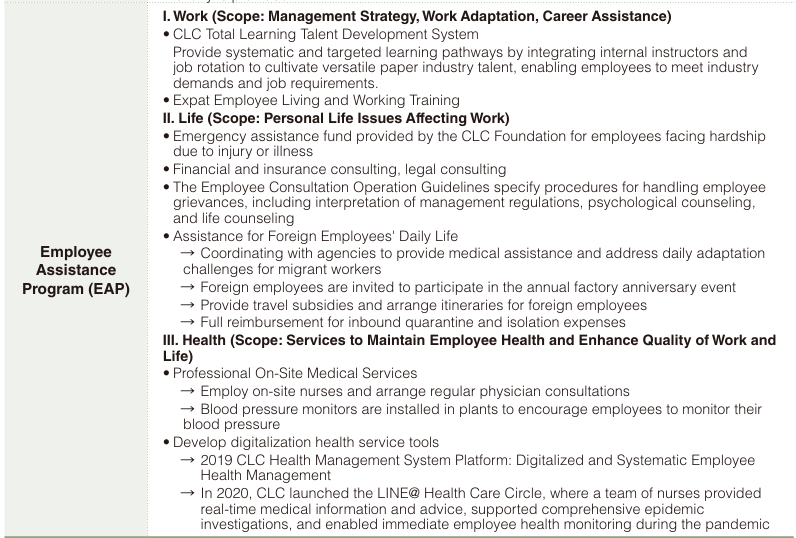
◆ Strengthen the Employee Assistance Program (EAP)
◆ Average employee regular salary to increase by 25% over 2020
◆ Maintain a healthy turnover rate below 12%
Human Resources Strategy:
Realizing Global Localization of Key Talent
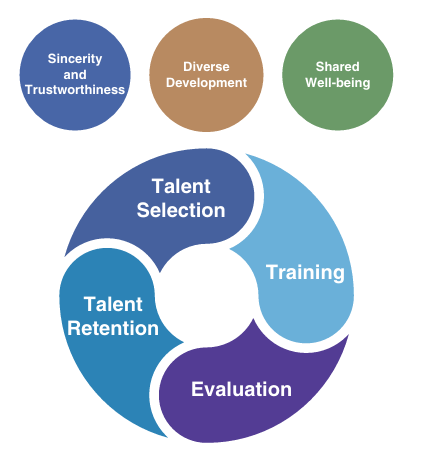
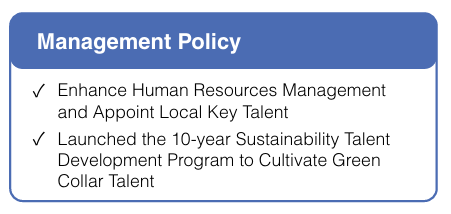
CLC prioritizes talent development by maintaining a competitive compensation system and comprehensive training framework to attract skilled professionals. Talent selection is guided by the principle of sincerity and trustworthiness, focusing on candidates who align with the company's culture, vision, and core values to meet workforce needs for domestic and international expansion and sustainable operations.
Employees underpin sustainable operations. Prioritizing workforce development, CLC monitors labor market trends to adjust compensation and benefits alongside corporate strategy and annual performance. By addressing employee needs, we continuously optimize pay structures to achieve shared prosperity.
Enhancing Women's Representation:
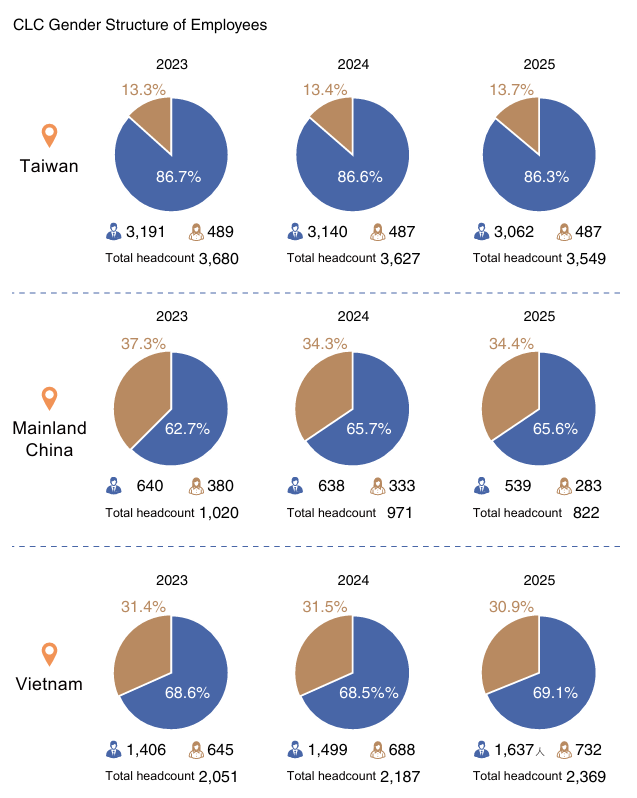
Women Comprise 13.7% in Taiwan Parent Company, 22.3% in Consolidated Company
By the end of 2025, major operating sites in Taiwan, Mainland China, and Vietnam employed 6,740 people (-44 YoY). Taiwan operations numbered 3,549 (-78 YoY), comprising 2,754 on-site workers, 646 administrative staff, and 149 senior executives (100% locally hired)Note. Reflecting industry characteristics, male headcount remained higher; however, female recruitment continued expanding in production, R&D, marketing, and digitalization. In 2025, female representation reached 13.7% in the Taiwan area and 22.3% in the Consolidated Company. Despite overall gender gaps, CLC enforces merit-based practices, ensuring non-discrimination across nationality, gender, ethnicity, religion, skin color, age, sexual orientation, marital status, or political affiliation. No discrimination incidents occurred in 2025.
*Note 1:Senior executives denote "managers and above ".*Note 2:For workforce demographics (category, age, tenure, education, contracts), please refer to the Appendix Employee Information List in 2025 Sustainability Report.。
Value Human Rights and Development Diversity
“Through fair and open recruitment channels, all employees are entitled to equal rights and
benefits regardless of gender, race, and nationality, in order to protect basic human rights.”

Human Rights: Diversity and Inclusion
Rooted in a people-oriented and diversity-respecting ethos, CLC aligns sustainability governance and risk management with United Nations Guiding Principles on Business and Human Rights (UNGPs), the Universal Declaration of Human Rights, and International Labor Organization Core Labor Standards. Guided by the CLC Human Rights Policy Management Guidelines, we respect fundamental rights across all operations. Operating sites worldwide strictly enforce local labor regulations, integrating commitments into the Implementation Regulations for the Employment of New Personnel.
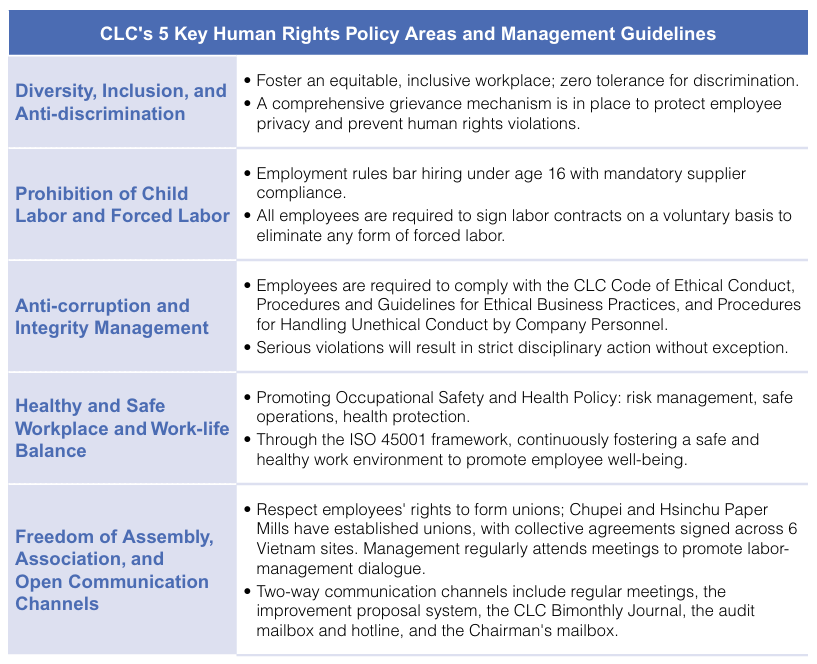
*Note:For the complete Human Rights Policy, please refer to CLC Website – Human Rights Policy. https://www.clc.com.tw/employees?i=30
Employee Education and Inclusive Workplace Mechanisms
Equal Opportunity and Inclusive Employment
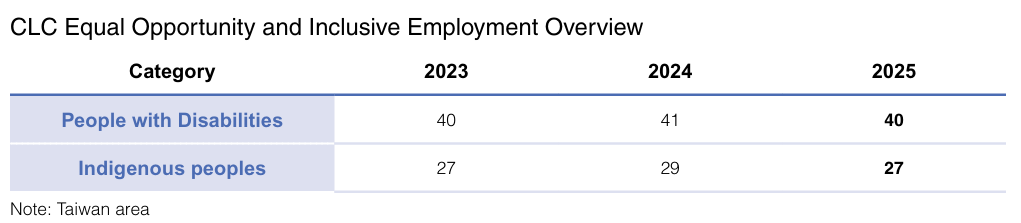
CLC ensures equal employment opportunities for disadvantaged groups by complying with the People with Disabilities Rights Protection Act and the Indigenous Peoples Employment Rights Protection Act. In 2025, Taiwan operations employed 40 staff with disabilities (meeting quotas) and 27 indigenous personnel, awarding 24 Indigenous Long-term Service Bonus. Local hiring is prioritized globally to enhance workforce stability. Where local recruitment was insufficient for certain production lines, foreign workers were introduced at Taiwan plants to maintain operational continuity.
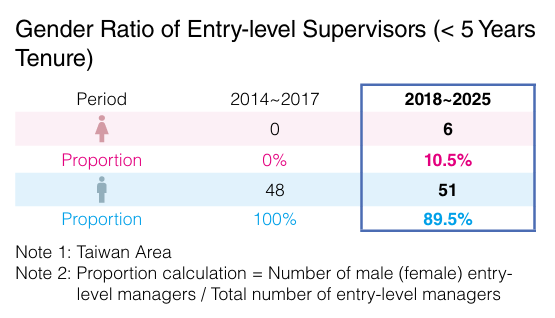
Rejuvenation & Female Promotion to Entry-level Management
In 24-hour continuous operations, shift leader positions traditionally skewed male (9:1 ratio) with an 11-year promotion average. Driving rejuvenation and gender parity since 2018, CLC promoted 57 employees with under 5 years of service to entry-level leadership (10.5% female). This lowers tenure barriers, balances gender representation, and expands inclusive management.
CLC Human Rights Risk Management and Due Diligence
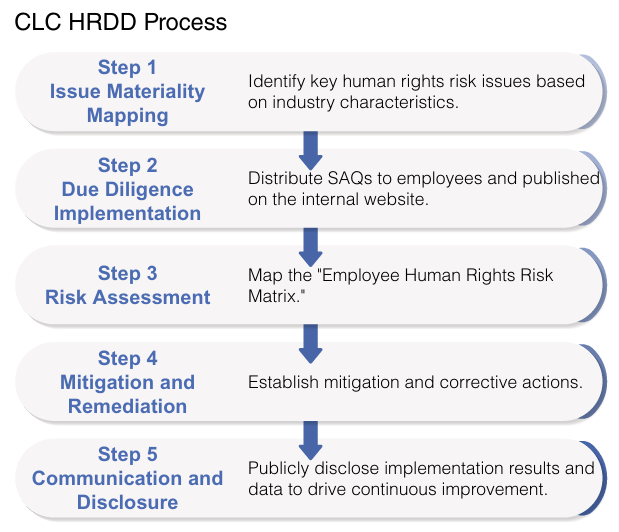
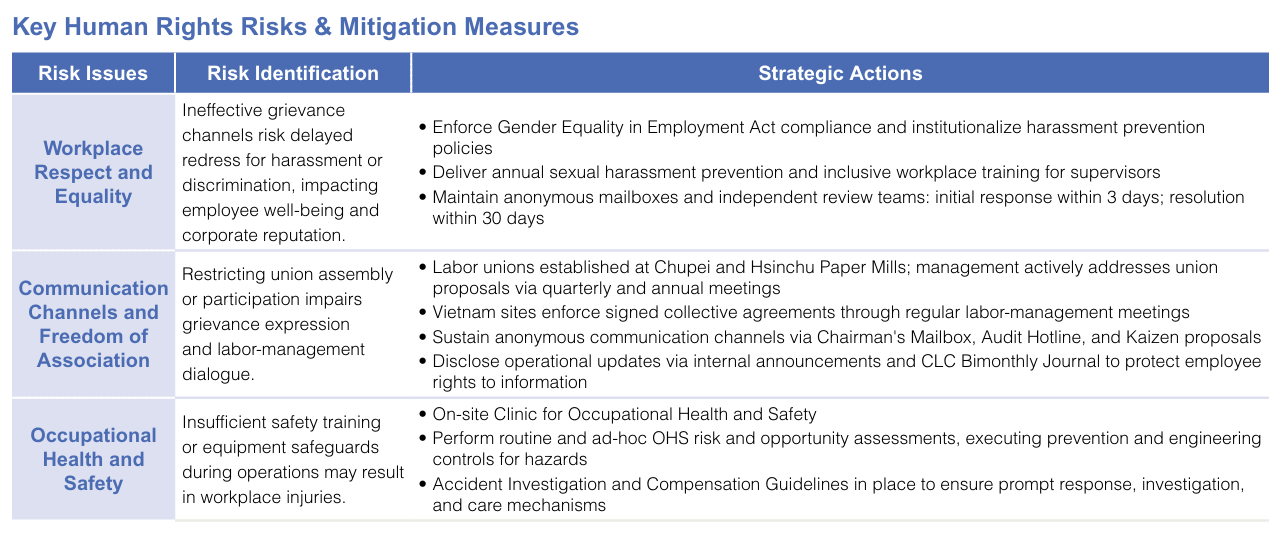
Advancing Human Rights Due Diligence (HRDD) through comprehensive systems, training, and risk identification, CLC formulated a five-step process aligned with the EU's Corporate Sustainability Due Diligence Directive (CSDDD) and Taiwan MOEA's Business Human Rights Due Diligence Operational Manual (Draft). By the end of 2025, we formally launched the HRDD across key stakeholders, spanning Taiwan parent company employees and supply chain partners. Employee HRDD processes and results follow below; for supply chain HRDD, please refer to P.72 in 2025 Sustainability Report.
7 Core Human Rights Risk Issues
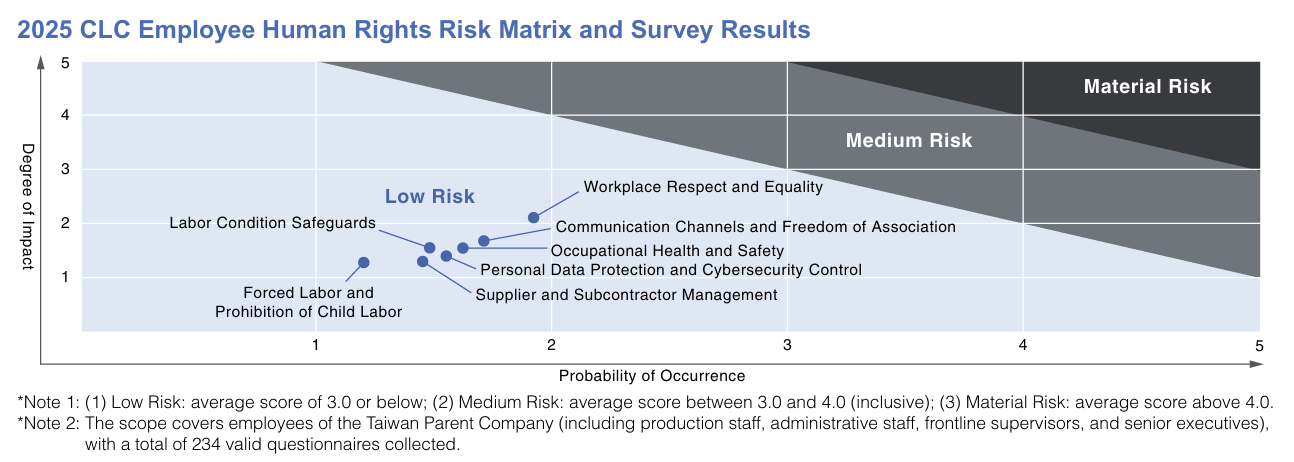
Low-risk Assessment Results and Ongoing Mitigation Management
Implement Training Programs to Optimize Management Organization
● Elite Talent Rotation Program
CLC annually selects top performers for cross-functional rotations to build diverse competencies, promoting outstanding talent into management training tracks.
● Talents Recommendation and Training System
Anchored in organizational growth and competency development, CLC delivers stratified training curricula. Launched in 2023, the Talent Recommendation and Cultivation System enables supervisory nominations, competency reviews, and career pathing. Through 2025, 22 talents were recommended, tracking 71 internal mobility records.
Applicability and Retention
Aligning compensation with education, expertise, and experience, CLC values personal attributes in talent allocation. Transparent frameworks for promotion, salary reviews, external training, and talent pools encourage managerial growth. Mid- and senior-level managers receive executive health screenings, medical coverage, and car allowances. In 2025, Taiwan operations recruited 358 employees, representing 10.1% of the workforce (male: 9.7%; female: 12.5%).
*Note:For details on the age distribution and regional breakdown of new CLC employees, see Appendix – Employee Information List in 2025 Sustainability Report.
People-oriented, Talent Optimization
Balancing Turnover Rates to Energize the Organization
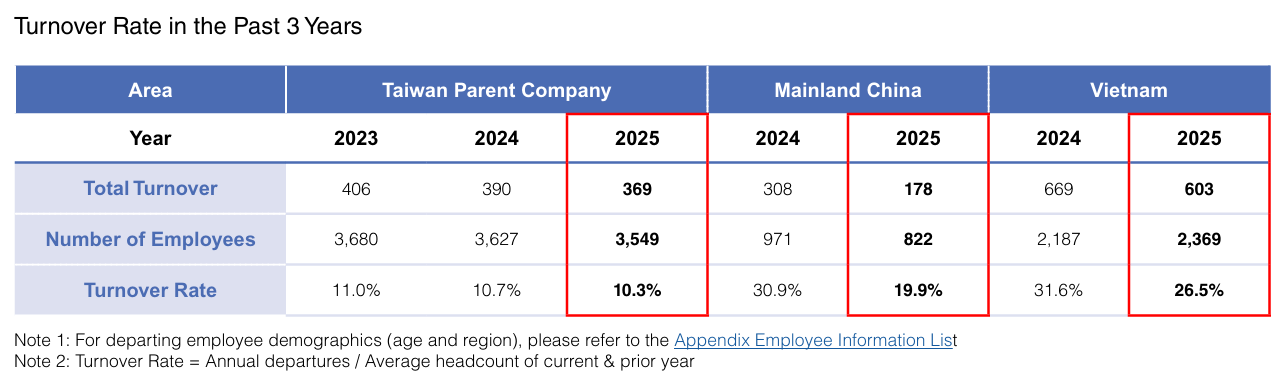
CLC maintains moderate workforce turnover to drive organizational vitality, keeping Taiwan turnover around 10%. In 2025, Taiwan departures totaled 369, yielding a 10.3% turnover rate (male: 10.3%; female: 10.9%). Group turnover stood at 19.9% in Mainland China (178 departures) and 26.5% in Vietnam (603 departures). Higher overseas turnover reflected regional conditions and strategic shifts: intense talent competition from Vietnam's electronics clusters, alongside capacity relocation and resource optimization in Mainland China to bolster Southeast Asian expansion.
The company addressed retirements and labor shortages by recruiting new employees through job fairs and academic collaboration. To retain talent and reduce turnover impact, direct supervisors and the HR conduct interviews with employees submitting resignation applications, offering internal transfer opportunities and career guidance to support employee development and strengthen organizational stability.
Surveying Departure Drivers; Digital Preemption of Turnover Risks
Since 2019, CLC's online anonymous exit survey has gathered feedback across 6 dimensions (including job content, competency, and feedback), collecting 331 valid responses. In 2024, CLC deployed Power BI dashboards to visualize global turnover dynamics. In 2025, AutoML predictive analytics were integrated to pinpoint high-turnover drivers at specific facilities, generating actionable intelligence to proactively mitigate attrition risks.
Re-employment of Senior Talent to Address Workforce Aging
CLC addressed labor shortages and an aging workforce by fostering a workplace culture that values experience and professional expertise. To date, 18 of the retired employees were rehired to support knowledge transfer and technologies, ensuring workforce continuity and adaptation to labor market changes.
Comprehensive Retirement System: Full Pension Funding
CLC allocates pension funds to Bank of Taiwan trust and individual accounts in accordance with the Labor Standards Act and Labor Pension Act, and implements the Employee Retirement Implementation Guidelines. An actuarial firm conducts annual reviews of retirement reserve account balances to ensure sufficient funding. Supervisors present the "Meritorious Service to CLC" retirement gold medal to long-serving retirees. The old pension scheme funding met required standards and was approved by the New Taipei City Labor Affairs Department for temporary suspension of further contributions. CLC will continue to monitor account status to ensure employee retirement protection and long term welfare.
*Note:For more details about CLC Retirement System , please refer to P.68 in 2025 Annual Report.
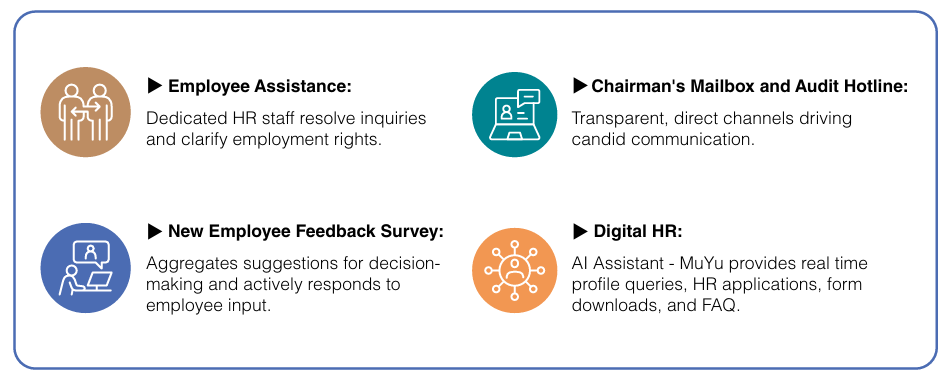
Capturing Workplace Voices via Systematic Employee Dialogue
CLC facilitates transparent employee communication through quarterly labor-management meetings, annual Employee Voice Surveys, onboarding/exit feedback, labor unions, and anonymous EIP intranet channels. Innovative digital tools are deployed to elevate employee experience and deliver real-time support.
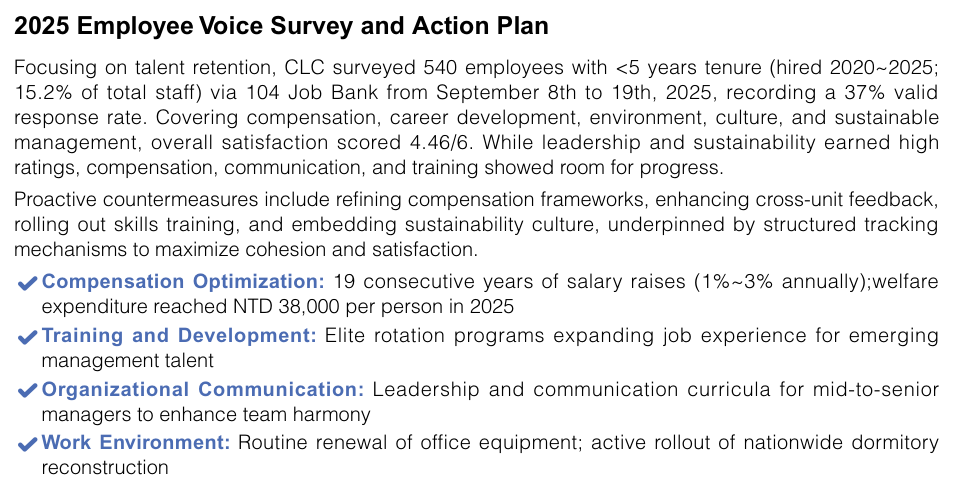
Industry First Comprehensive Employee Voice Survey
As the only paper company systematically surveying employee feedback since 2019, CLC demonstrates an enduring commitment to workplace excellence. The survey spans six core pillars:Workplace Environment, Career Development, Supervisor Incentives, Peer Communication, Corporate Culture, and Sustainable Development. Employee incentive mechanisms reinforce survey engagement, generating actionable data to dynamically adjust HR policies and foster a people-first sustainable culture.
Reinforcing Response Mechanisms: Workplace Equality & Communication
Leveraging multi-year survey findings, CLC optimizes workplace equity, dialogue channels, and compensation. A cross-functional taskforce under the Headquarters Administration Division evaluates feedback to set concrete improvement goals, embedding targeted measures directly into corporate HR roadmaps and annual plans.
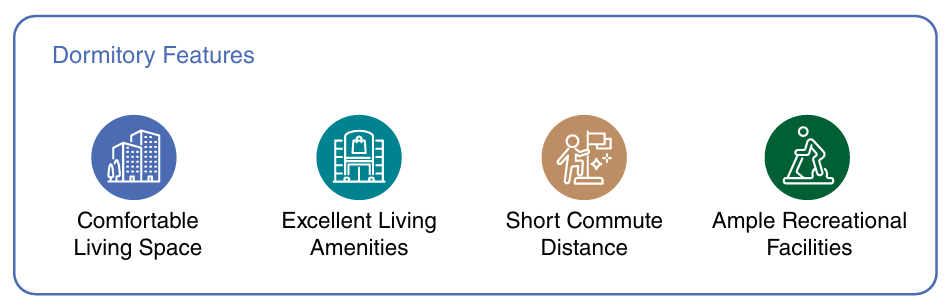
CLC Dormitory Renovation for Employee Well-being
To mitigate commuting burdens and support rotational learning, CLC provides housing across all facilities, launching a nationwide dormitory overhaul in 2021. Integrating solar power, heat pumps, and energy-saving systems into smart residences, upgrades at Panchiao Box Plant and Tayuan Mill concluded in June and April 2026, respectively, adding over 200 beds. Overseas dormitory capacities are expanding simultaneously to support holistic employee well-being.
Pioneering ESOT for Talent Retention
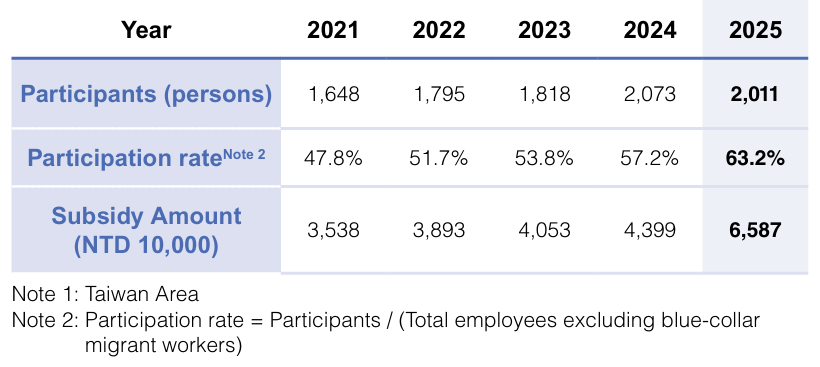
63.2% Participation, NTD 65.87M in Subsidies
Since 1998, CLC has led the industry in implementing the Employee Stock Ownership Trust (ESOT), encouraging employees to make monthly voluntary contributions, with the company matching 40% of the employees amount (up to NTD 3,200 monthly) for purchasing company stock. In 2025, the voluntary participation rate exceeded 63.2%. This system has enhanced employees financial autonomy and strengthened long-term savings and shared business results.
Labor-management Meetings and Labor Union:
Establishing a Robust Dialogue Mechanism
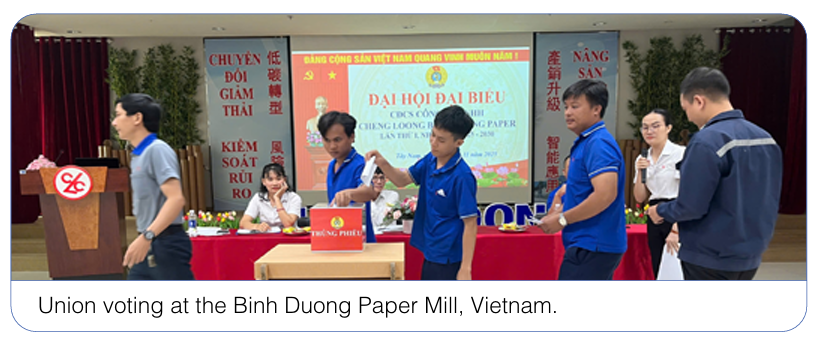
CLC holds quarterly labor-management coordination meetings at each mill/plant to facilitate mutual understanding and consensus. Two internal labor unions at Chupei and Hsinchu Mills convene annual member meetings and quarterly board meetings to address and follow up on union representatives' suggestions, ensuring employee needs and challenges are properly managed. In 2025, a total of 44 labor-management meetings were held company-wide. CLC operates mills/plants in Vietnam with a collective agreement. Ongoing communication and coordination ensure stable labor relations.
Industry-Leading!
19 Consecutive Years of Salary Increases
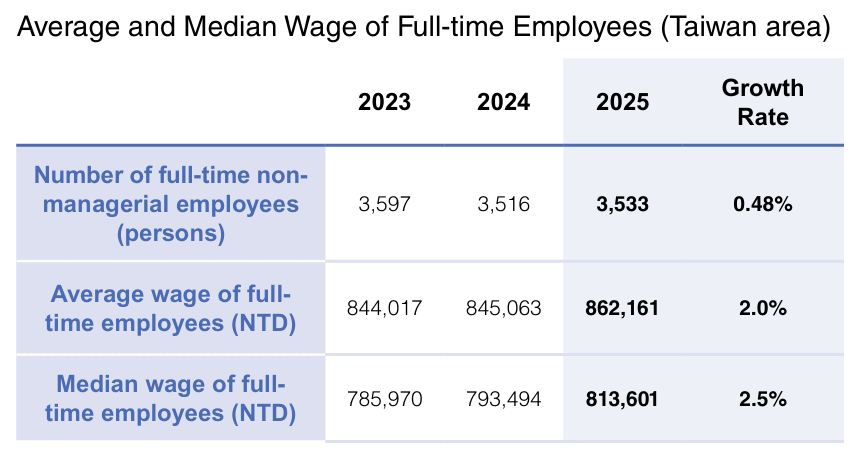
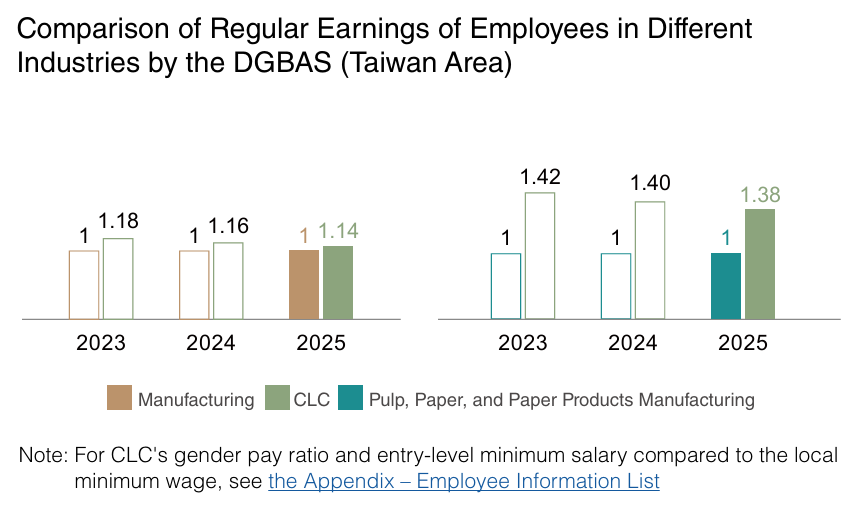
To attract and retain talent, CLC offers competitive compensation exceeding statutory minimum wages: starting pay for new hires with bachelor's and master's degrees exceeds legal baselines by >35% and >53%, respectively. Committed to equal pay, minor grade-level variances reflect longer male tenure and higher on-site overtime. Benchmarking labor markets, CLC adjusts salaries based on performance, achieving 19 straight years of increases (1%~3% annually). In 2025, a 2% pay increase lifted average regular salaries by 14.9% vs. 2020. Full-time non-managerial staff averaged NTD 862,000 (median: NTD 814,000).
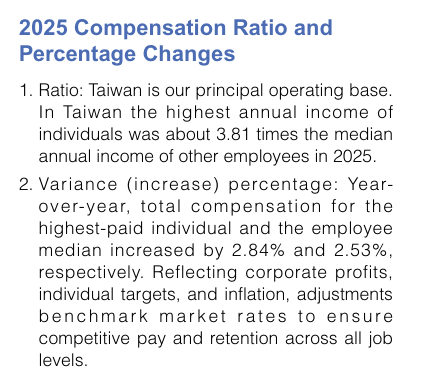
Shared Prosperity: >70% Allocation to Entry-Level Compensation
Under the Securities and Exchange Act and amended Articles of Incorporation, CLC allocates ≥1% of pre-tax profits (pre-employee compensation) as employee remuneration starting in 2024. Regulations mandate allocating ≥60% of this pool to entry-level staff to drive grassroots incentives. Distribution plans are formulated by the Compensation Committee and approved by the BoD.
Actual allocations to entry-level staff have consistently exceeded 70% in recent years, surpassing statutory minimums and embedding shared prosperity into frontline operations.
CLC dynamically evaluates business performance, staff contributions, and regulatory shifts to align compensation with sustainability goals. This institutional approach boosts morale, reinforces ESG human capital governance, and sustains long-term competitiveness.
Employee Benefits
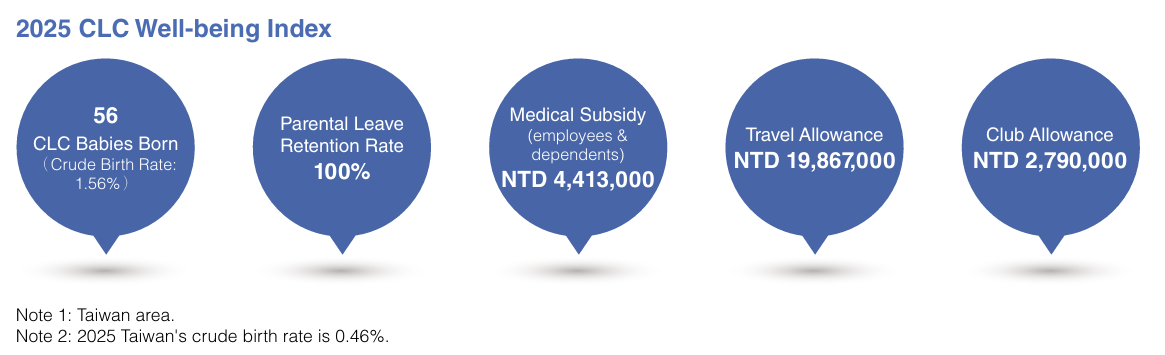
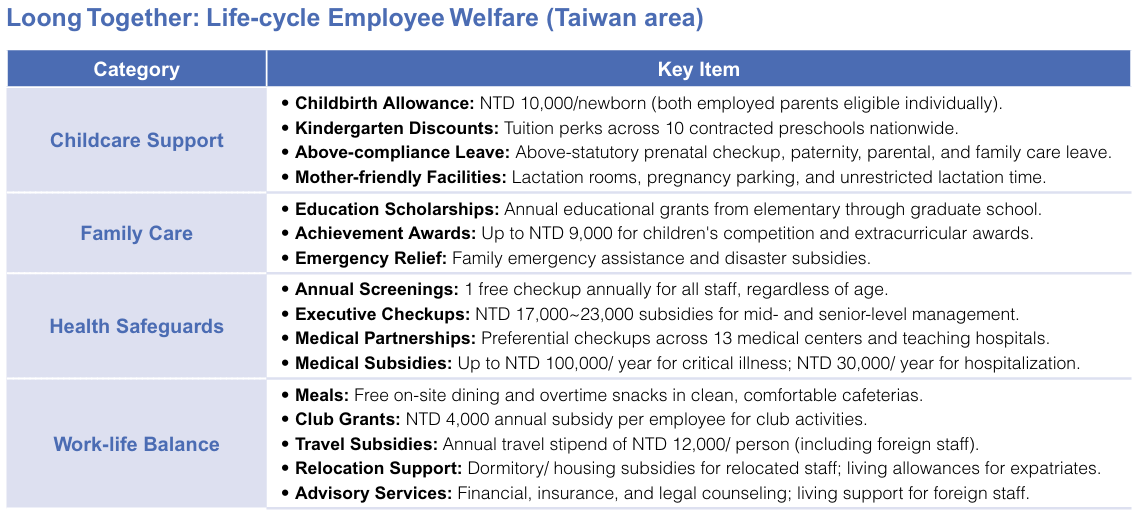
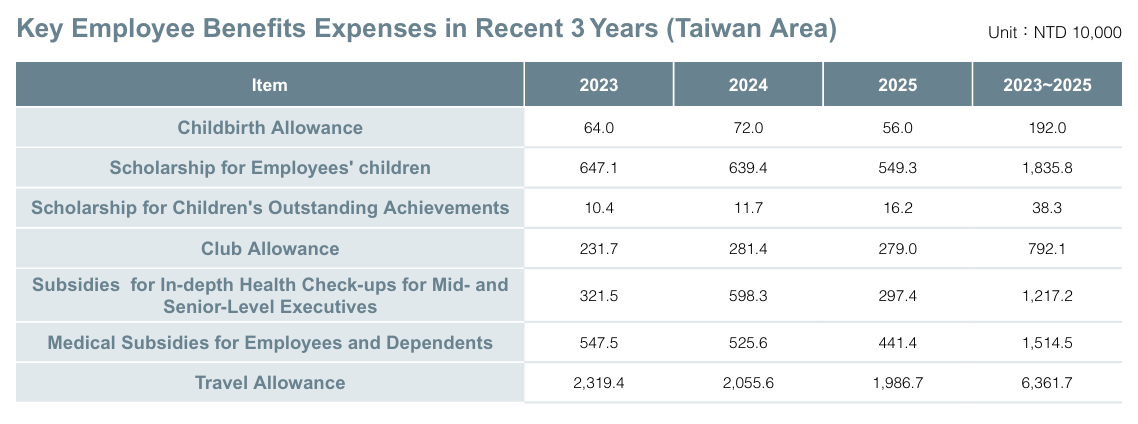
Above-Compliance Benefits: NTD 38,000 Per Person Welfare Spend
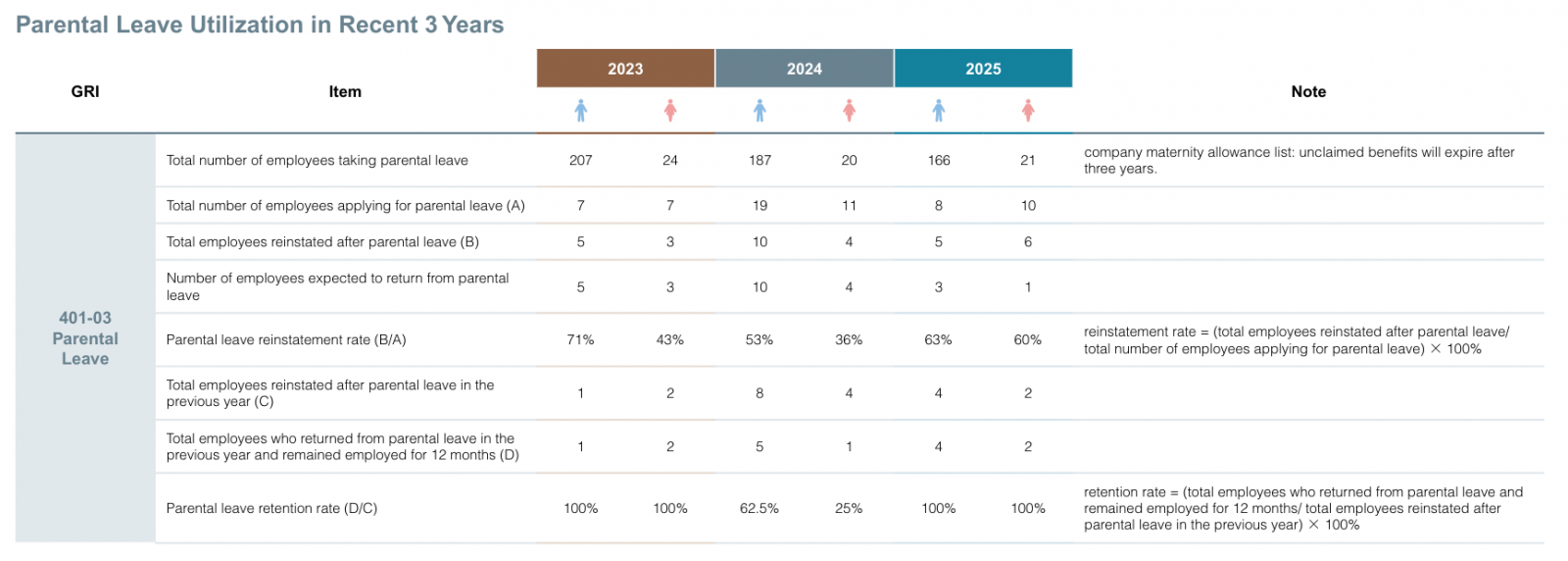
CLC ensures full regulatory compliance while providing stable, sustainable Employee Assistance Programs (EAPs) across compensation, benefits, and professional development. Regular Employee Welfare Committee meetings and family-care initiatives advance holistic well-being. In 2025, per-employee welfare spend reached NTD 38,000, and CLC secured the 1111 Job Bank Happy Enterprise Gold Award for the 6th consecutive times.


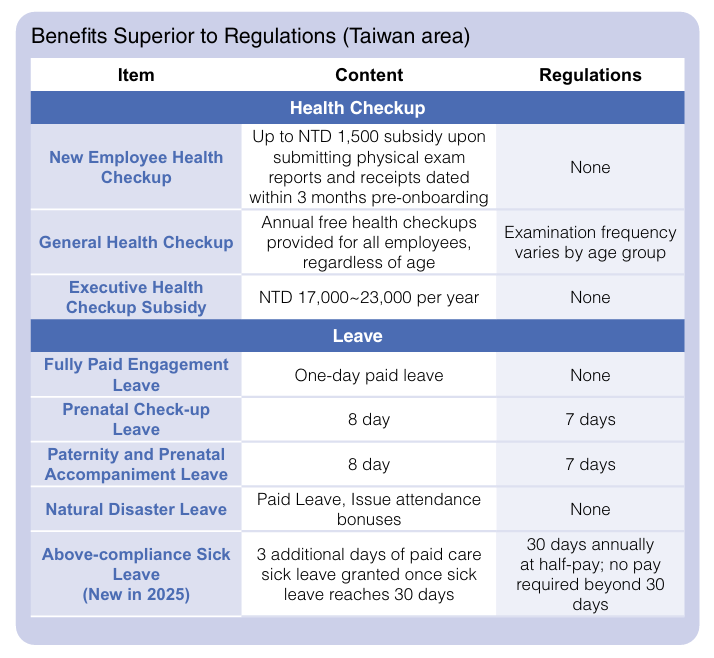
Surpassing local statutory requirements, CLC reduced weekly working hours from 48 to 44 across selected Vietnam sites—enhancing employee well-being and productivity to deliver on corporate human rights commitments.